24-hour fuel draining service
from 95 € · never more than 600 €
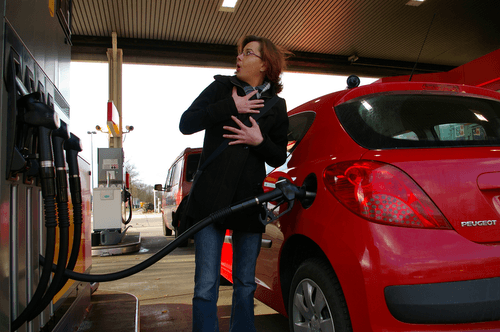
Filled up with the wrong fuel? Petrol in a diesel or diesel in a petrol car?
Fast help: filled up with diesel instead of petrol, or petrol instead of diesel?

HELP

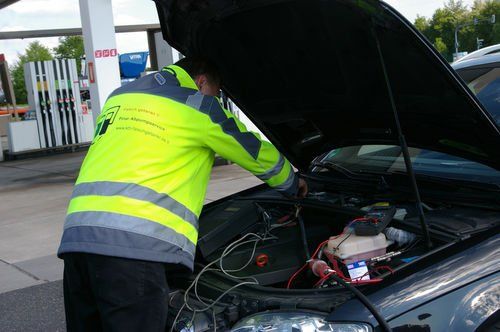
We drain your tank

DONE
ABOUT US
- We are automotive mechatronics engineers and experts in misfuelling.
- We will ensure that you can continue your journey quickly, right on site.
- You'll save your engine and a lot of money.
- Your car does not need to go to a repair shop or be towed.
- You can continue your journey and do not need to stay overnight.
- We dispose of the resulting fuel mixture professionally.

Watch the video - Misfuelled in Cologne - 24-hour emergency service throughout NRW
Our service area: We drain your tank on site—in Düsseldorf & surrounding area, the Bergisches Land, in Köln, Krefeld & Aachen, the Ruhr area and the Lower Rhine region. All towns with their own page: Locations & service area. Answers to frequently asked questions: Questions and answers. What we experienced in 2026: Figures from 287 call-outs.
OUR SERVICE
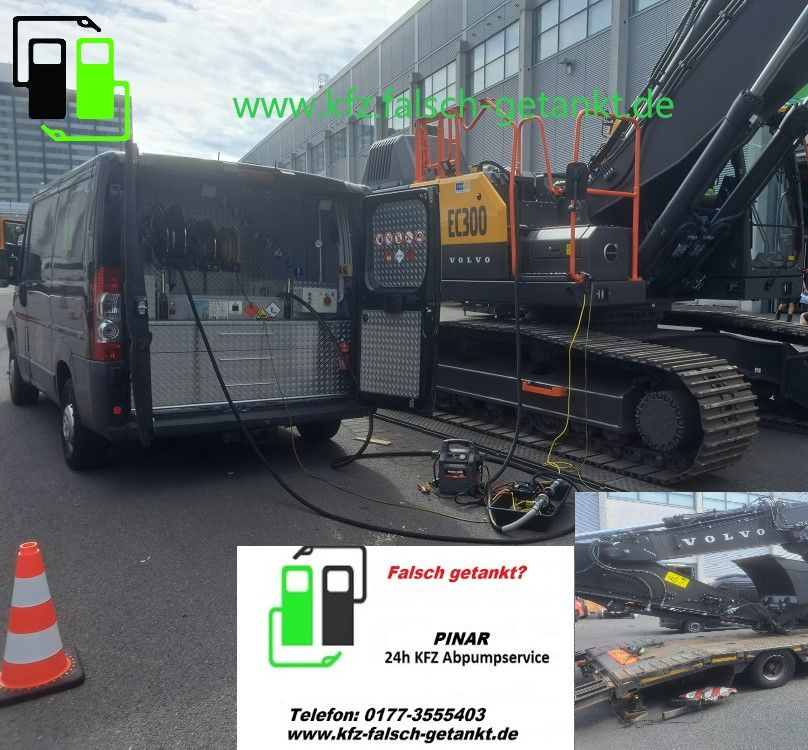
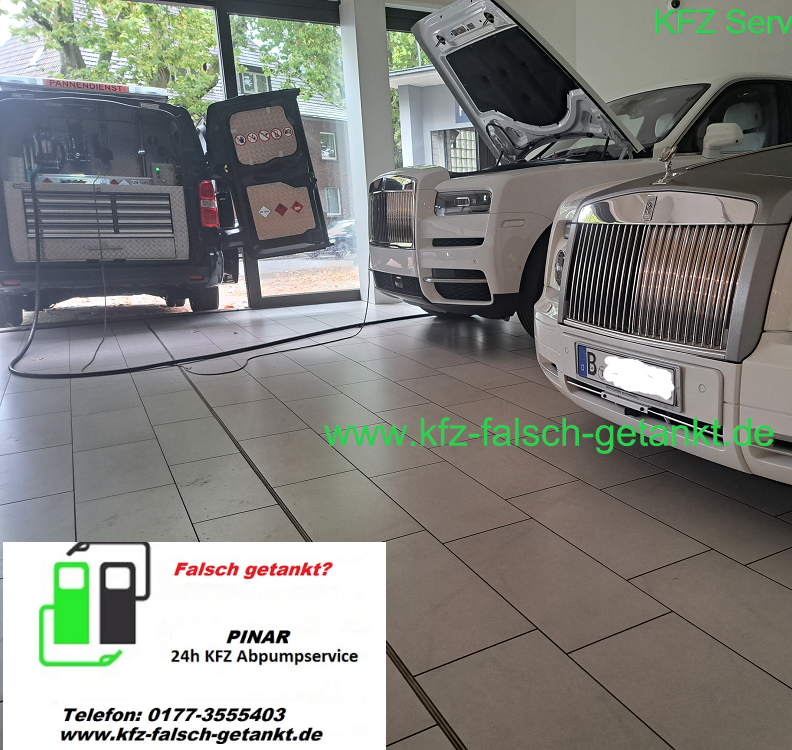
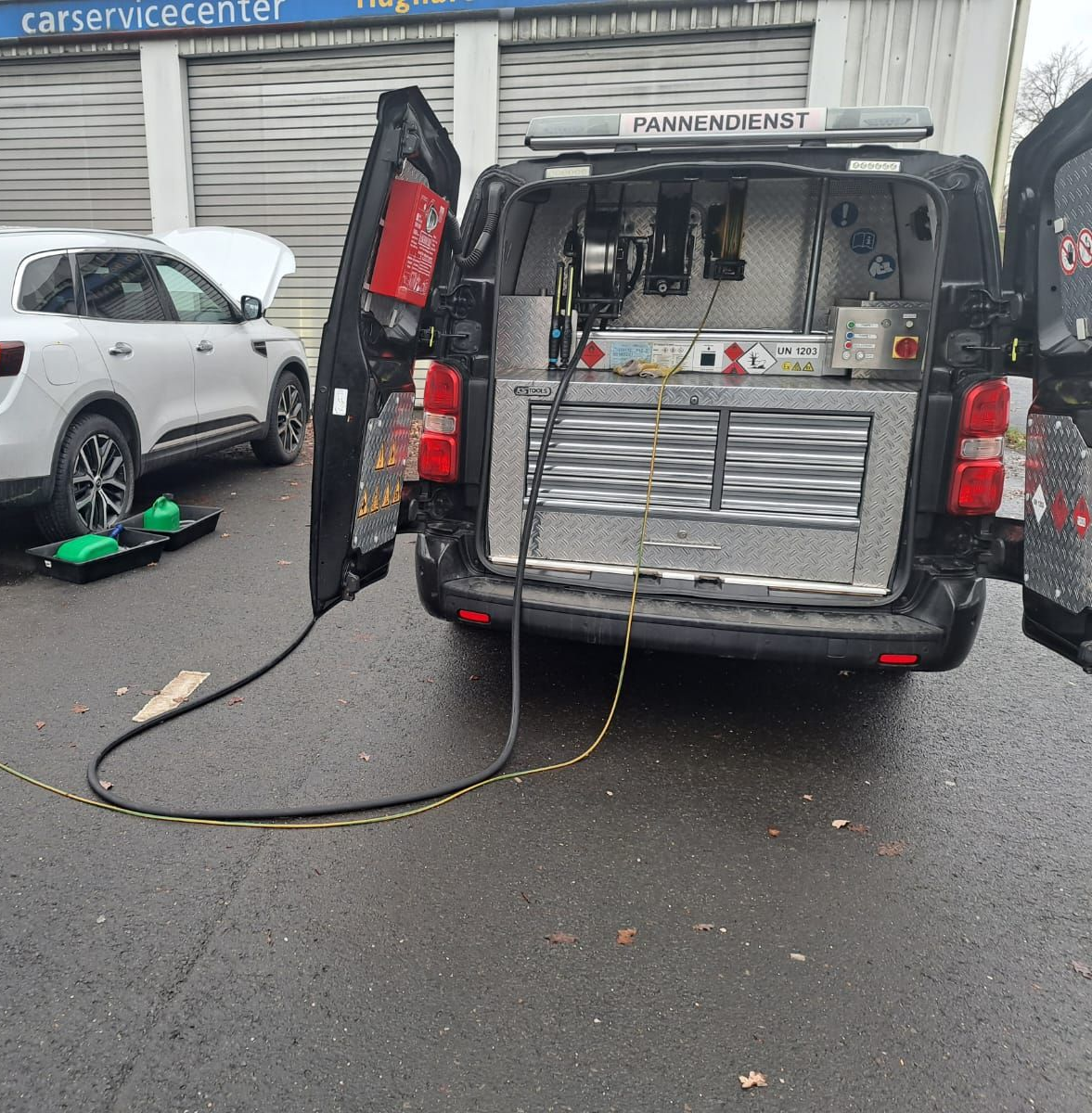
- Our vehicles are specially modified according to applicable regulations (ATEX approval, ADR regulations, TÜV testing).
- Trained staff are available for you 24/7, including Sundays and public holidays.
- We specialize in emptying fuel tanks of all types of vehicles: cars, trucks and motorcycles.
- Don't let unprofessional individuals or companies ruin your vehicles.
- Our guarantees:
- Guaranteed professional
- Guaranteed low price
- guaranteed fast
- Guaranteed friendly

Here are the key questions and answers if you have filled up with the wrong fuel.
Filled up with the wrong fuel—what should you do right now?
Stop refuelling immediately and make sure the engine and ignition are switched off. Misfuelling can have serious consequences, ranging from the engine simply stopping to severe damage to the injection system. Remember: as soon as you realise your mistake, do not start the engine again! In newer vehicles, the fuel pump is often activated as soon as you open the door, or at the latest when you switch on the ignition, allowing the wrong fuel mixture to enter the system immediately. Check your owner’s manual for the steps recommended by your manufacturer, and call us on 0177 3555403. We’ll tell you over the phone whether on-site fuel draining is essential or whether, in exceptional cases, topping up with the correct fuel may be enough.
Filled up with petrol instead of diesel?
Petrol in a diesel tank is extremely serious. Even small amounts can damage your engine. If you have filled up with petrol instead of diesel, do not start the engine under any circumstances. If it is already running, stop immediately and switch it off. Older diesel vehicles (indirect-injection diesels with swirl or pre-combustion chambers) can often tolerate a small amount of petrol, but this is absolutely not the case with modern direct-injection engines (Common Rail and unit injector engines built from 1999 onwards). Professional fuel draining is essential to avoid damage costing several thousand euros.
What are the technical risks of petrol in diesel?
Petrol immediately washes away the essential lubricating film provided by diesel. In the high-pressure pump of modern injection systems, this causes metal shavings to form straight away. These spread throughout the fuel system and can destroy injectors, lines and the tank system. The damage often only becomes apparent after a short drive, when the pump fails completely. Many “experts” believe that a little petrol in diesel does no harm (especially in winter), but this is no longer true for today’s modern high-performance engines! If the engine has already been running, the entire system often needs to be replaced.
Diesel in a petrol car? What damage could it cause?
Drivers generally know which fuel to use, but the technical differences are often underestimated. Diesel in a petrol tank can cause serious damage to the fuel injection system. Petrol engines ignite fuel using spark plugs, whereas diesel ignites under high pressure, so a petrol engine will not run on diesel. It may start using the petrol left in the fuel lines, but will stop as soon as diesel reaches the cylinders. Damage to the injection system and exhaust after-treatment system (catalytic converter) is also possible. Professional on-site fuel draining is the safest option.
I filled up with diesel instead of petrol—can I keep driving carefully?
Even if only a small amount of diesel has been put in a petrol car, you should leave the engine switched off. If you only realise you’ve misfuelled while driving, stop immediately and switch off the engine. Depending on the engine type and the amount of incorrect fuel, you may be able to continue driving carefully and keep topping up with the correct fuel to dilute the mixture. However, this risks damaging the injection system and catalytic converter. Having the tank drained is always the safer option. If you can’t find clear guidance in your owner’s manual, contact our emergency service.
Filled up with AdBlue instead of diesel?
Never put AdBlue in the diesel tank! It can cause irreparable engine damage. AdBlue is a NOx-reducing agent used to reduce nitrogen oxides in catalytic converters, but it must not enter the fuel injection system. If you have filled up with the wrong fluid, your vehicle’s tank must be professionally drained. If you have not switched on the ignition, draining the tank and cleaning it thoroughly are usually enough. However, if the ignition has been switched on, AdBlue can crystallise and destroy components such as pumps, lines, filters and injectors, requiring them all to be replaced.
What should you do if AdBlue has been put in the diesel tank?
AdBlue is extremely corrosive to fuel lines, hoses and the injection system. If you have not switched on the ignition, mobile fuel draining and a thorough tank cleaning are usually sufficient. However, if the ignition has been switched on, AdBlue may already have entered the sensitive system, where it can crystallise and destroy pumps and injectors. In this case, filters and lines often need replacing as well as cleaning the tank. Since recommendations vary considerably by manufacturer, contact us immediately on 0177 3555403 for a technical assessment.
Is filling up with E10 petrol instead of E5 dangerous?
Filling up with E10 instead of E5 is only safe if your vehicle’s manufacturer has explicitly approved it for E10. If it has not been approved, even a single instance of putting in the wrong fuel can cause serious damage. According to ADAC experts, if only a small amount has been added, topping up the tank immediately with Super Plus (E5) may be enough to correct the ethanol blend. However, if you have filled the tank completely with E10, the fuel must be professionally drained—depending on the manufacturer’s instructions—to prevent damage to the vehicle’s components.
Filled up with E10 instead of E5 petrol—what are the consequences?
You should only use E10 if your vehicle manufacturer has approved it. Otherwise, even a single misfuelling with E10 can cause lasting damage. According to ADAC experts, if only a small amount was added, immediately topping up with low-ethanol fuel such as premium plus may be enough to restore a safe ethanol blend. However, if you filled the tank completely with E10, the fuel must be drained, depending on the manufacturer’s instructions.
Does regular petrol need to be drained if you filled up instead of premium or premium plus?
In most cases, you can avoid draining the tank as long as you don’t put the engine under heavy load until all the incorrect fuel has been used up. This means avoiding high speeds, uphill driving and towing. Top up with the correct grade of fuel as soon as possible to restore the octane rating in the system.
Filled up with regular petrol instead of premium or premium plus?
In most cases, you can avoid draining the tank as long as you don’t put the engine under heavy load until the fuel has been used up. This means avoiding high speeds, uphill driving and towing heavy loads. Top up with the correct grade of petrol (octane rating) as soon as possible to restore the fuel’s knock resistance and protect the engine from damage.
Filled up with the wrong fuel—what will it cost?
20% of diesel car drivers have filled up with the wrong fuel at least once in their lives. A mobile fuel-draining service can dramatically reduce costs compared with having your car towed and repaired at a dealership. On-site fuel draining starts at €95 incl. VAT. Including call-out and disposal, a job usually costs around €300 and never more than €600, depending on location, vehicle type and fuel volume. Without help, you risk damage costing several thousand euros. For example, a Peugeot 407 (2.0 HDI): high-pressure pump (~€828), injector (~€403), catalytic converter + DPF (~€1,521), replacement diesel engine (~€5,886), fuel tank (~€616), plus workshop labour. We’ll give you a binding fixed price over the phone before we set off—and it already includes the night and weekend surcharge.
Filled up with the wrong fuel—who pays for the damage?
Motor third-party liability insurance and partial or fully comprehensive insurance policies generally do not cover the costs. Putting the wrong fuel in a vehicle is legally classed as operational damage caused by improper use of the vehicle (in line with the Regional Court of Berlin ruling of 2 December 2011). Operational damage is damage not caused by external factors such as accidents or severe weather. Many insurers explicitly exclude this type of damage under the so-called “petrol clause”. This also applies to borrowed cars, company cars and rental cars—the driver is usually personally liable for the fuel to be drained and any necessary repairs.
What does diesel bug in the tank mean?
Diesel bug refers to microorganisms such as mould, bacteria and yeast growing in diesel fuel. Since fuels are organic in origin (chemical compounds made of carbon), these organisms can multiply in the presence of water—formed through condensation—and produce visible microbial sludge that affects the entire fuel system.
What are the dangers of diesel bug?
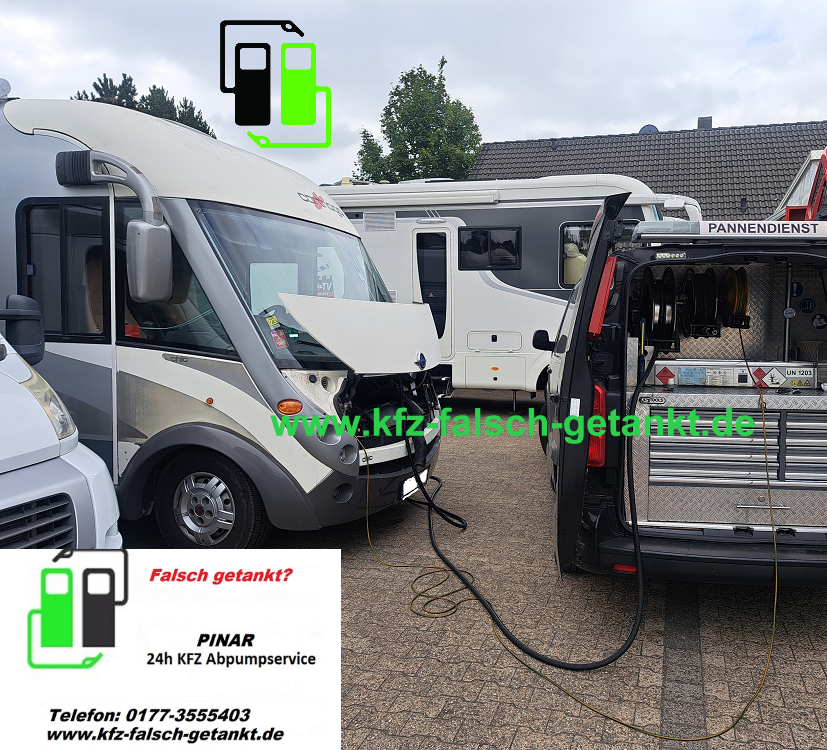
Microbial sludge can clog fuel lines and filters and severely damage key engine components. In theory, these problems can also occur with petrol engines (when high proportions of biofuel such as E10, E85 or E100 are blended in). Vehicles that are left standing for long periods are particularly at risk, such as motorhomes, boats and agricultural machinery. To prevent engine damage after long periods out of use, the fuel tank often needs to be professionally drained and cleaned.
How can I avoid filling up with the wrong fuel by mistake?
Filling up with the wrong fuel usually puts your engine at risk of damage. To help prevent this, the EU introduced Directive 2014/94/EU, which requires standardised fuel labels. Look for the geometric symbols: a circle for petrol, a square for diesel and a diamond for gas. This is especially useful abroad, where it helps avoid mix-ups between terms such as “gasolina” and “gasóleo”.